Every step tells you exactly what to enter. No guesswork, no technical knowledge needed.
1
Draw your roofFind your home on the map and outline your roof. Add any shadows from trees or neighbouring buildings.
2
Set the tiltRefine pitch and orientation in the 3D view. Use your phone to capture the exact angle automatically.
3
Enter your consumptionAdd your annual electricity usage and how your household uses energy — including EV or heat pump if you have one.
4
Add your financialsEnter your electricity tariff and installation budget. Sensible defaults are pre-filled — skip what you don't know.
5
Choose your goalMaximise savings, self-sufficiency, or payback speed. PV Freund sizes the system automatically.
What separates a well-planned system from an expensive mistake
"Bigger system, more savings. We went with 12 kWp to be safe."
Once your system covers your consumption, every extra panel feeds surplus to the grid at a fraction of what grid electricity costs. Those panels still need to be paid for — and they take much longer to do it.
The right system isn't the biggest one. It's the one sized to what you actually use.
"We skipped the battery — too expensive. Self-consumption is fine at 40%."
Without storage, most of your solar production happens while you're at work. The panels produce, the grid takes it, and you buy it back at full price in the evening.
A correctly sized battery doesn't cost money. It redirects money you'd otherwise spend on grid electricity.
"South-facing, 35° tilt — that's the standard, so we didn't check further."
Tilt and orientation affect not just yield but when you produce. South at 35° peaks at midday when most households draw the least. An east-west split often beats it for self-consumption.
The optimal roof isn't the one that generates most. It's the one that generates when you consume.
"The installer gave us a 10 kWp recommendation based on our annual consumption."
Annual kWh tells you nothing about when you use energy. A household that works from home needs a very different system than one that's empty all day — even with identical annual consumption.
Your consumption profile, not your annual total, determines the right system.
Frequently Asked Questions about PV Planning
Do I need technical knowledge?
No. Every step is guided and tells you exactly what to enter. The complex calculations — shading analysis, storage sizing, yield forecasting — happen automatically. If you can use Google Maps, you can complete a full PV plan.
How accurate are the yield forecasts?
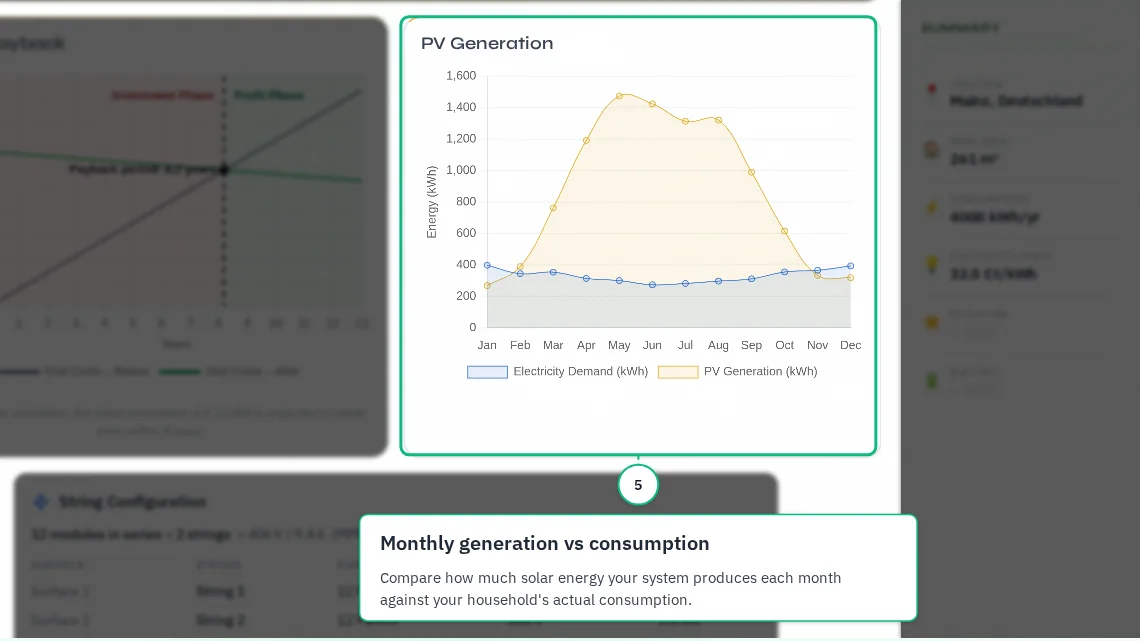
PV Freund uses EU-PVGIS satellite weather data and simulates all 8,760 hours of the year for your specific roof. The result is a forecast accurate to within ±10% — based on your actual roof geometry, orientation, and local climate, not a generic rule of thumb.
Which roof types are supported?
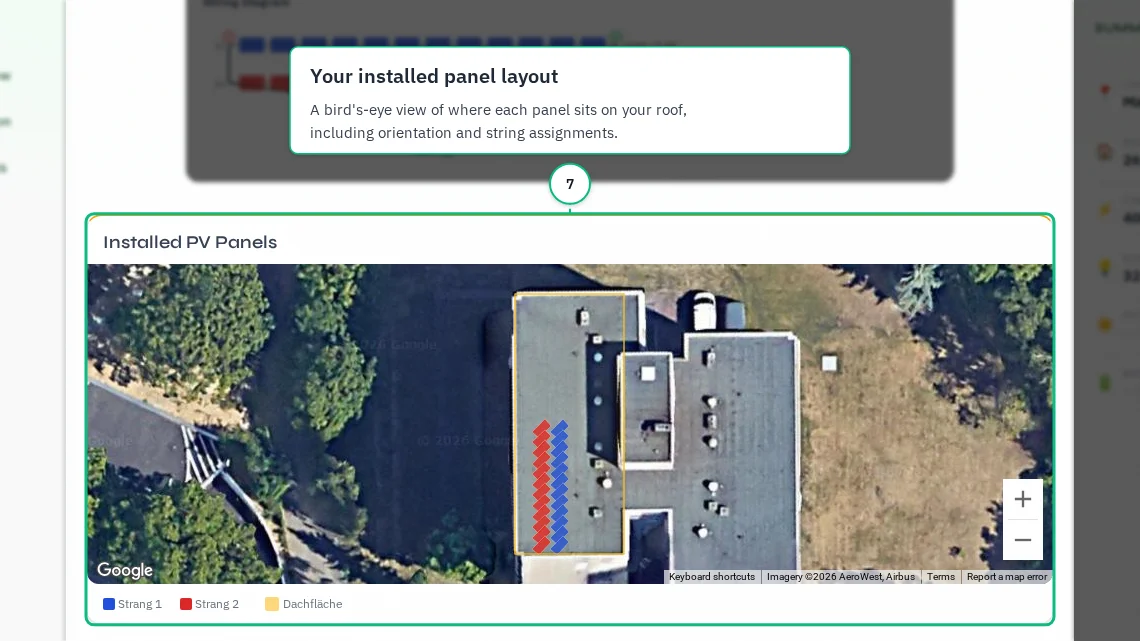
PV Freund supports pitched roofs (gable, single-pitch, hip) with automatic tilt detection, as well as flat roofs where you can freely choose the mounting in the 3D editor. Multiple roof surfaces with different orientations (e.g., east-west) can also be combined for a realistic overall assessment.
Can I compare different scenarios?
Yes, in custom mode you can try any number of configurations: PV system with or without storage, different numbers of modules, different storage sizes. Each configuration immediately shows the self-sufficiency rate, self-consumption, payback period, and total savings over 25 years.
Will I be contacted by installers?
No. PV Freund is an independent planning tool — not a lead generation platform. Your results are yours alone. Your data is never shared with installers, solar companies, or any third party unless you explicitly request a quote.
What happens after planning?
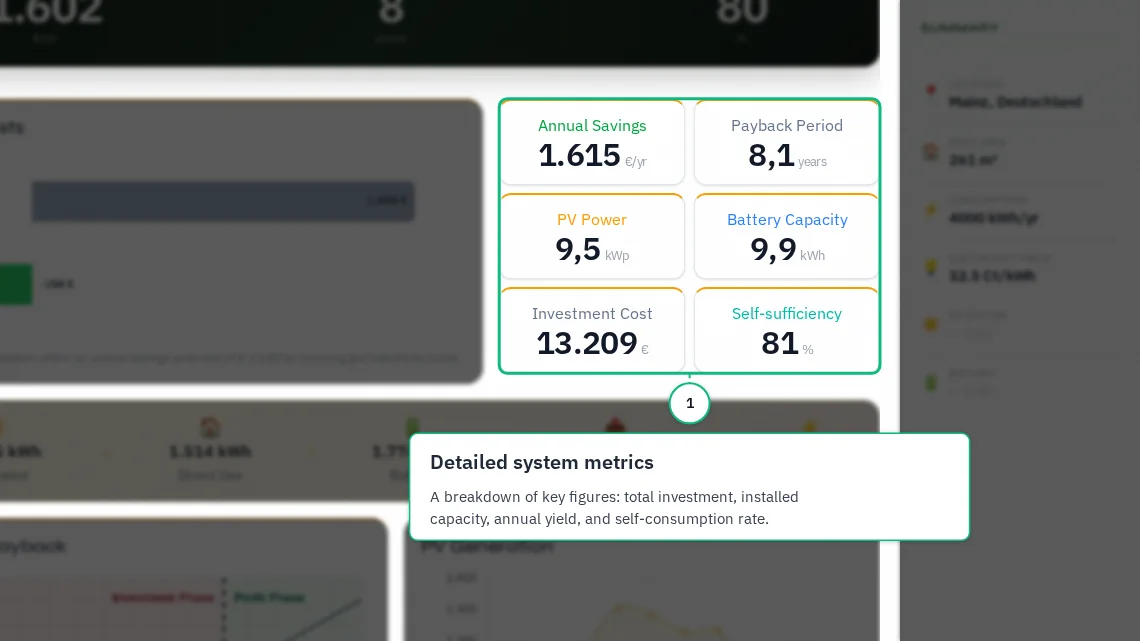
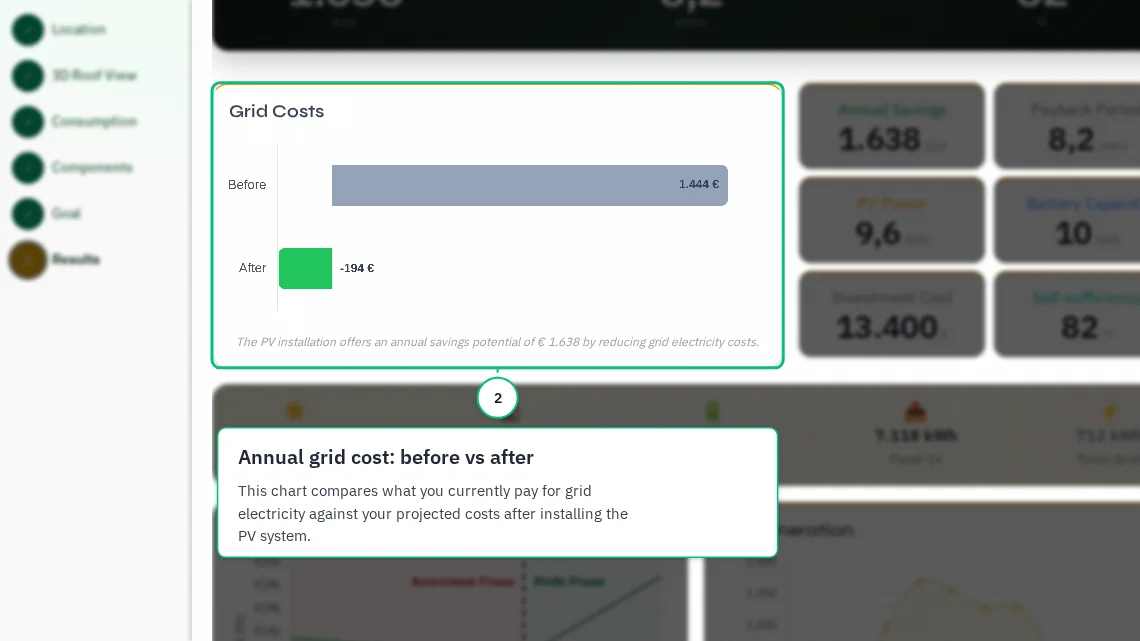
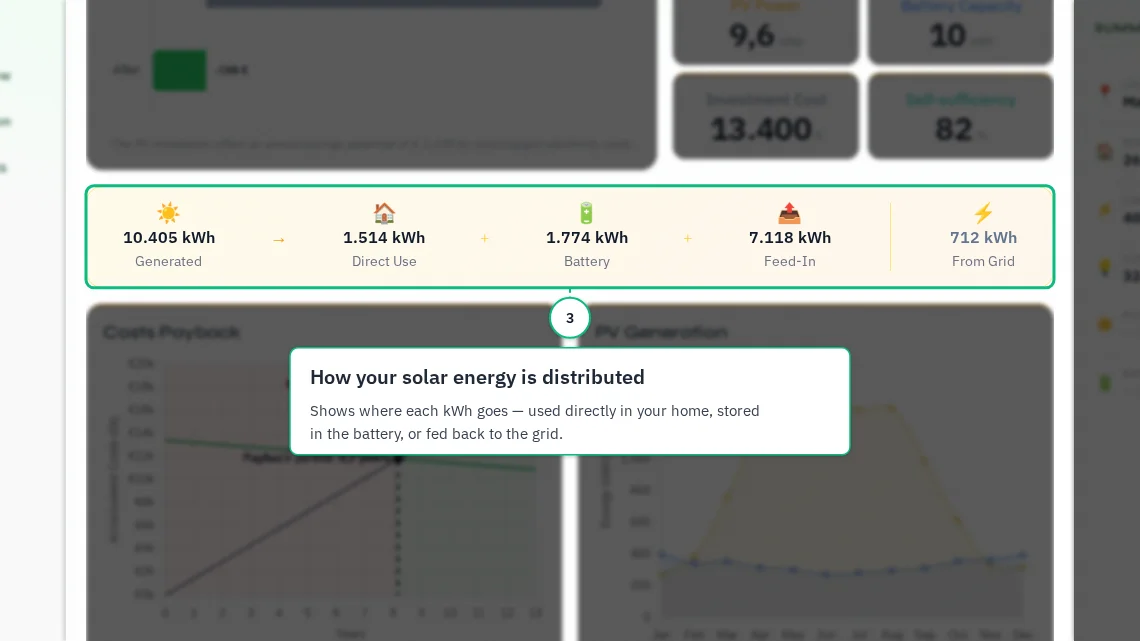
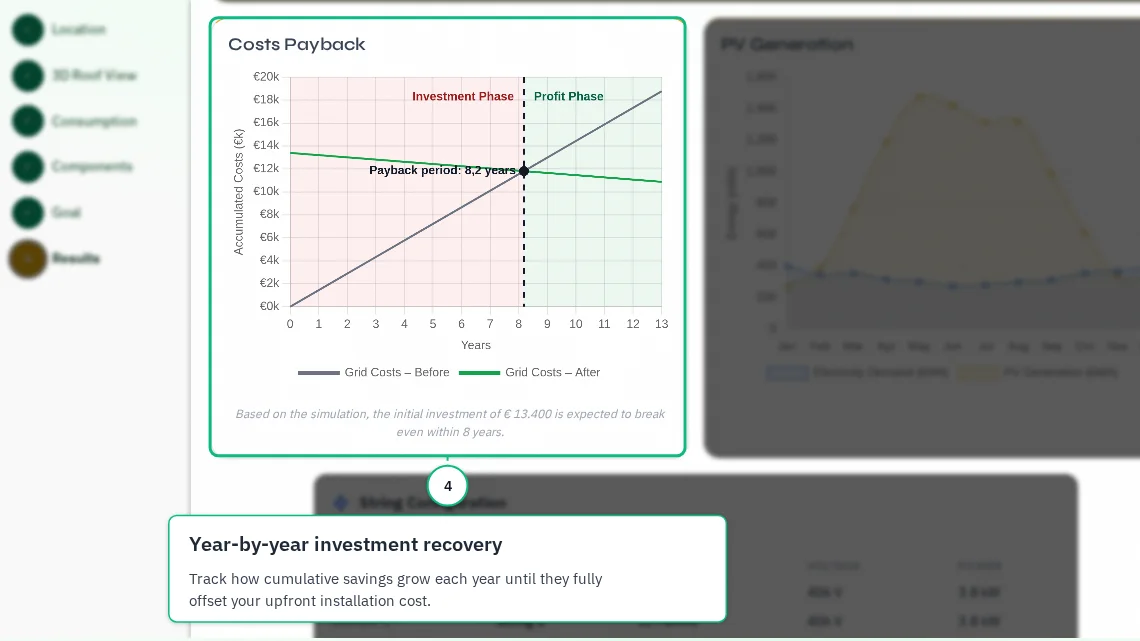
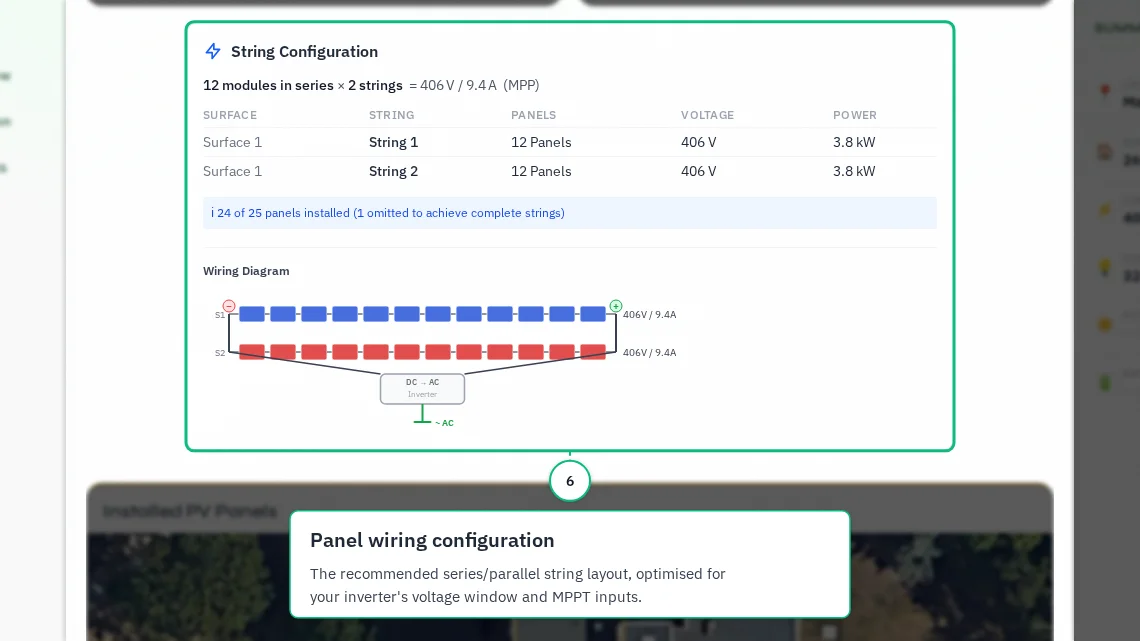
You receive a detailed report with all key figures: recommended PV output, storage size, annual yield, self-consumption rate, self-sufficiency rate, investment costs, annual savings, and payback period. Print it out and use it when requesting quotes from installers to get comparable, like-for-like offers.