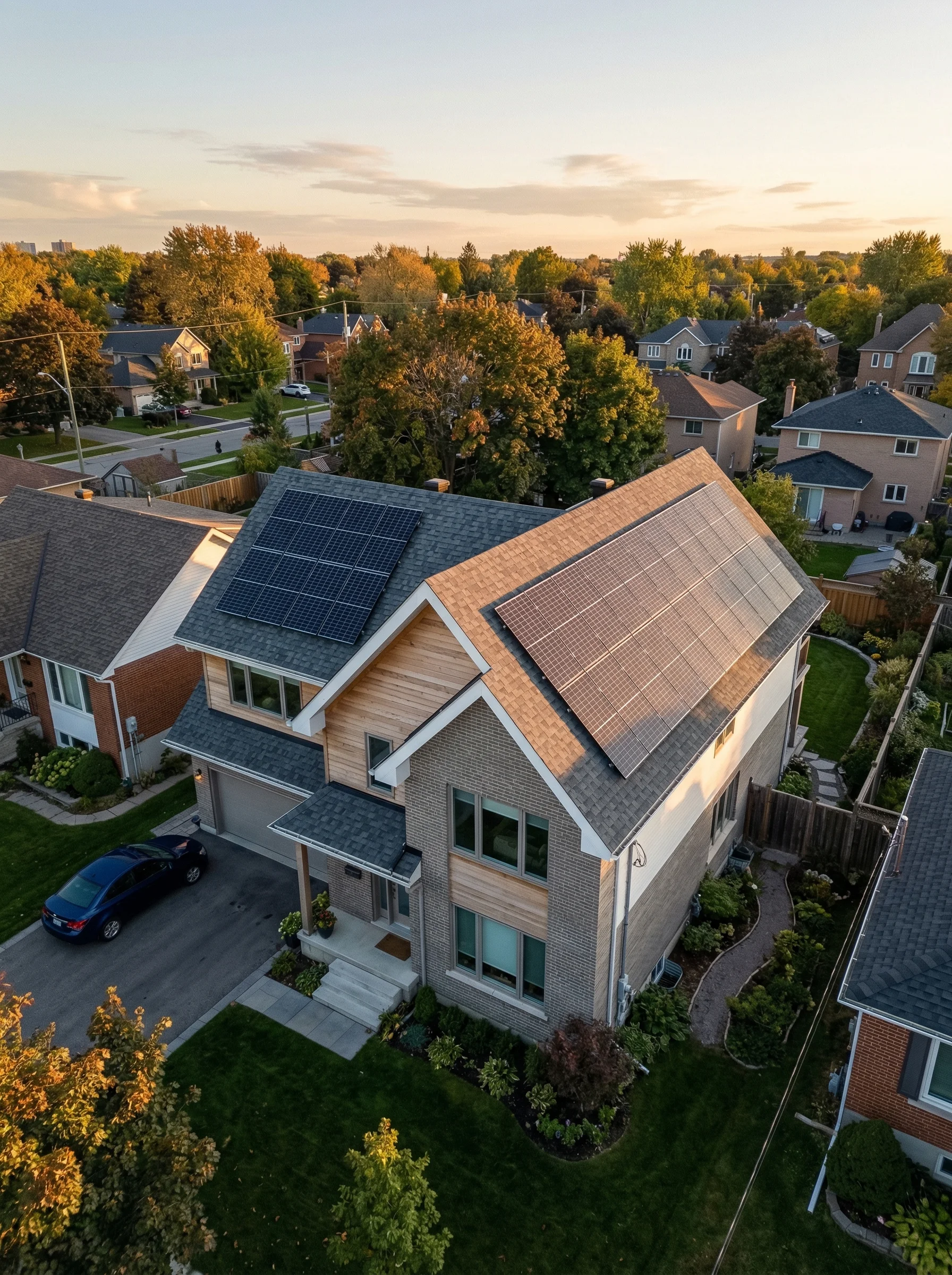
Save on Electricity Costs with Solar: How Much Can You Save?
Electricity prices are rising, but your bill can go down. With your own PV system, you produce clean electricity cheaper than your provider. Our free calculator shows you in minutes how high your personal savings potential is and when the investment will pay off for you.
✓ Free✓ No Registration✓ GDPR Compliant✓ EU-PVGIS Data
Ø €1,500Savings per yearA household with a 10 kWp system and 5,000 kWh consumption can save over €1,500 in electricity costs annually.
up to 80%less grid electricityThanks to high self-consumption and battery storage, you only draw a fraction of your electricity from the expensive energy provider.
< 10 yearsPayback periodModern PV systems often pay for themselves after 8 to 10 years and then generate pure profits for about 20 years.
€0Free & Non-bindingOur analysis is 100% free and does not oblige you to anything. Your data remains private and is not stored.
Figures based on PV Freund simulations using EU PVGIS weather data.
Before You Install: The Decisions That Matter Most
Get these three decisions right and your system will perform for the next 25 years. Get them wrong and no amount of optimization will fix it.
Know Your Roof
Your roof's orientation, tilt, and shadow situation determine the ceiling on your savings — no system can outperform a badly positioned one. PV Freund maps your exact roof geometry and simulates shading hour by hour across a full year, finding the orientation that maximises your financial return — not just peak output.
✓ East/west beats south for self-consumption
✓ Shadow losses calculated
✓ Economically optimal, not just maximum
Know Your Demand
A household that consumes 4,000 kWh/year needs a very different system depending on whether someone is home during the day or not. The timing of your demand determines how much solar you actually capture — and how large a battery makes financial sense. Add an electric car or heat pump and the numbers shift again. PV Freund models your full demand profile, not just your annual total, so the system is sized for how you actually live.
✓ Demand profile, not just annual kWh
✓ EV & heat pump included
✓ Battery sized to your rhythm
Size It Right
A system that's too large wastes capital on panels that never pay back. One that's too small leaves savings permanently on the table. The same logic applies to battery storage. The financially optimal size sits at the intersection of your roof's production potential and your real demand — and it's different for every household. PV Freund calculates exactly that: the kWp and kWh combination that maximises your return, not your system size.
✓ Not too much, not too little
✓ PV + battery sized together
✓ Optimised for your return
After You Install: Getting the Most from Your System
The hardware is in place. Now a few smart habits make the difference between good savings and great ones.
Shift Loads to Solar Hours
Your solar system produces most of its power between 10am and 3pm. Running your dishwasher, washing machine, or tumble dryer during that window means you're using electricity that would otherwise be fed back to the grid at a fraction of its value — instead of buying it back at full price. No extra hardware, no investment. Just timing.
Smart EV Charging
An electric car is one of the largest electricity consumers in your home — and one of the biggest opportunities. A wallbox with solar integration automatically charges your car when your panels are producing surplus, instead of drawing from the grid. For households with an EV, this single behaviour can represent a significant share of total annual savings.
Heat Pump Pre-Heating
A heat pump is efficient, but it still needs electricity. The trick is running it during solar peak hours to pre-heat your home — letting the building's thermal mass store that warmth for free through the evening. If your heat pump supports smart scheduling, this can be set and forgotten. The result is heating costs that run largely on sunshine rather than grid electricity.
In 3 Steps to Your Personal Savings Forecast
1
Enter DataEnter your annual electricity consumption and your address. Our tool automatically determines your roof areas and the local solar radiation.
2
Analysis in ProgressPV Freund simulates 8760 hours a year and compares thousands of system configurations to find your maximum savings potential.
3
View SavingsYou will receive a detailed breakdown: expected savings, payback period, self-consumption rate, and the recommended system size.
Calculation Examples: This is How Much Our Users Save
Same starting point, different needs. See how PV Freund finds the right, cost-saving setup for everyone.
"We assumed south-facing was the only good option — until PV Freund showed us otherwise."
South-facing roofs generate the most electricity overall — but most of that peak pours out at midday when nobody is home. An east-west split produces less in total, but delivers it across morning and evening when the family is cooking, showering, and running appliances.
Savings don't come from generating more electricity. They come from using more of what you generate.
€1,300/yrSaved
8 kWp · 7 kWhSystem + Battery
9 yearsPayback
"Our neighbours got a battery, so we assumed we needed one too."
A battery exists for one reason: to bridge the gap between when solar produces and when you consume. Work from home and that gap almost disappears — the washing machine, the dishwasher, the oven run exactly when the panels are at full output.
Their goal wasn't to store energy. It was to never need to store it.
€1,050/yrSaved
6 kWp · No batterySystem
7 yearsPayback
"More panels, more savings. That's what we thought."
Up to a point, that's true. But once your system covers your consumption, every extra panel produces surplus that feeds back to the grid at a fraction of what grid electricity costs. Those panels still need to be paid for. They just take much longer to do it.
The best return doesn't come from the biggest system. It comes from the right-sized one.
€1,600/yrSaved
9 kWp · 8 kWhSystem + Battery
8 yearsPayback
Frequently Asked Questions about Saving on Electricity Costs
How accurate is the calculation of the savings?
Very accurate. We use hourly weather data (EU PVGIS) and simulate your electricity consumption over a whole year. We take into account current electricity prices, feed-in tariffs, degradation, and realistic system costs to create a reliable 20-year forecast.
Is it worth getting a storage system to save more?
Often, yes. A storage system significantly increases self-consumption, which is the biggest savings lever. However, it also costs money. Our calculator checks whether the additional savings justify the cost of the storage over its lifetime and recommends the financially optimal size.
What if the feed-in tariff continues to fall?
This is already taken into account and only makes self-consumption more important. The main advantage of a PV system lies in the savings from self-consumed electricity, not in the income from feed-in. A falling tariff often makes a system with storage even more worthwhile.
Can I save even without equity?
Yes. Many banks offer low-interest solar loans. Often, the monthly installments are lower than the electricity cost savings achieved, so you have a positive cash flow from day one and save virtually without any of your own investment.
Does my roof orientation affect how much I can save?
Yes, but less than most people think. A south-facing roof at 30–35° tilt is optimal, but east/west orientations still deliver 80–90% of the output and can even improve self-consumption by spreading generation across morning and evening. PV Freund automatically finds the best orientation for your specific roof.
How long does a PV system last, and does it keep saving money?
Modern PV panels are guaranteed for 25–30 years and typically produce electricity for 30–40 years. Output degrades by around 0.3–0.5% per year. Our calculator factors in this degradation so your 20-year savings forecast is realistic, not optimistic.